
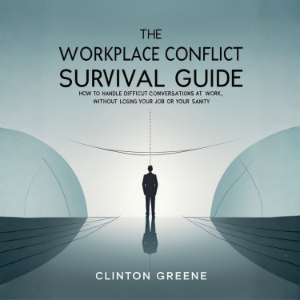
The Workplace Conflict Survival Guide
Clinton Greene
This audiobook is narrated by a digital voice.
Conflict at work isn’t always obvious. Sometimes, it’s the small things: a missed email, a sarcastic remark, or a meeting that feels intentionally unproductive. Recognizing the early signs of tension can...
Location:
United States
Networks:
Clinton Greene
Digital Voice Madison G
Ginnie Writes Publications
English Audiobooks
INAudio Audiobooks
Description:
This audiobook is narrated by a digital voice. Conflict at work isn’t always obvious. Sometimes, it’s the small things: a missed email, a sarcastic remark, or a meeting that feels intentionally unproductive. Recognizing the early signs of tension can prevent escalation. Here’s a simple framework to assess conflict: Identify the SourceCheck Your RoleDetermine the StakesUnderstanding the conflict’s nature helps you respond strategically, not emotionally. Remember, reacting impulsively often escalates situations instead of resolving them. Most workplace conflicts thrive on miscommunication. A single poorly worded email can ignite months of tension. To communicate effectively during conflict: Listen FirstSpeak Calmly and ClearlySeek Solutions, Not BlameConflict is inevitable, but mastering communication gives you control. You don’t have to eliminate disagreements, but you can manage them in ways that protect your career and your wellbeing. Duration - 1h 33m. Author - CLINTON GREENE. Narrator - Digital Voice Madison G. Published Date - Sunday, 04 January 2026. Copyright - © 2026 CLINTON GREENE ©.
Language:
English
Preface
Duration:00:01:42
Foreword
Duration:00:02:33
Introduction
Duration:00:00:03
Why Workplace Conflict Is Inevitable—and Survivable
Duration:00:02:09
Why Conflict Isn’t the Problem—How We Handle It Is
Duration:00:01:27
The Hidden Cost of Silence, Avoidance, and Emotional Reactions
Duration:00:01:20
What This Book Is—and What It Is Not
Duration:00:01:25
I. PART ONE
Duration:00:00:06
Chapter 1
Duration:00:00:03
Why Work Brings Out the Worst in Us
Duration:00:02:50
Power Changes How We Speak—and How We Listen
Duration:00:01:13
Pressure Narrows Our Thinking
Duration:00:00:48
Personality Differences Become Fault Lines
Duration:00:00:49
Why Smart People Still Handle Conflict Poorly
Duration:00:01:18
Chapter 2
Duration:00:00:03
The Most Common Workplace Conflicts
Duration:00:00:40
Employee vs. Manager
Duration:00:01:44
Peer-to-Peer Tension
Duration:00:01:22
Team and Cross-Department Conflicts
Duration:00:01:14
Remote and Hybrid Misunderstandings
Duration:00:01:19
Recognizing the Pattern Before It Escalates
Duration:00:00:56
Chapter 3
Duration:00:00:03
When Conflict Becomes Dangerous to Your Career
Duration:00:00:39
Red Flags You Should Never Ignore
Duration:00:01:16
When to Speak Up—and When to Pause
Duration:00:01:20
Understanding Workplace Politics Without Becoming Political
Duration:00:01:18
The Risk of Emotional Visibility
Duration:00:01:10
II. PART TWO
Duration:00:00:11
Chapter 4
Duration:00:00:03
Get Clear Before You Get Courage
Duration:00:00:40
What You Really Want vs. What You’re Reacting To
Duration:00:01:23
Why Reactions Feel So Urgent
Duration:00:00:46
Separating Facts, Feelings, and Assumptions
Duration:00:01:24
Why Clarity Protects You
Duration:00:00:35
A Practical Preparation Check
Duration:00:00:42
Chapter 5
Duration:00:00:03
Managing Your Emotions So They Don’t Manage You
Duration:00:00:37
Why Emotions Intensify at Work
Duration:00:01:03
Staying Calm Under Pressure
Duration:00:00:55
Handling Fear Professionally
Duration:00:00:36
Handling Anger Without Escalation
Duration:00:00:34
Managing Anxiety Before and After Conversations
Duration:00:00:37
When Emotions Are a Signal, Not a Problem
Duration:00:00:28
Mediator’s Insight
Duration:00:00:16
Chapter 6
Duration:00:00:03
Choosing the Right Time, Place, and Approach
Duration:00:00:32
Why Timing Matters More Than Urgency
Duration:00:00:56
When Email Is a Mistake
Duration:00:01:03
When HR Should (and Should Not) Be Involved
Duration:00:00:59
Choosing the Right Setting
Duration:00:00:37
Setting the Tone Without Setting Off Alarms
Duration:00:00:44
Approach Determines Outcome
Duration:00:00:39
III. PART THREE
Duration:00:00:10
Chapter 7
Duration:00:00:03
How to Start a Difficult Conversation Without Escalating It
Duration:00:00:46
Why Openings Matter More Than You Think
Duration:00:00:45
Opening Lines That Lower Defensiveness
Duration:00:00:57
Language That Signals Professionalism, Not Blame
Duration:00:01:12
Practical Examples of Openings
Duration:00:01:16
Chapter 8
Duration:00:00:03
What to Say When You’re Being Blamed, Dismissed, or Interrupted
Duration:00:01:42
Why Blame Feels Personal
Duration:00:00:40
Responding Without Sounding Defensive
Duration:00:01:10
Holding Your Ground Respectfully
Duration:00:00:40
When You’re Interrupted
Duration:00:00:40
Chapter 9
Duration:00:00:03
Listening Without Agreeing or Giving In
Duration:00:00:43
Why Listening Matters More Than Speaking
Duration:00:00:53
Active Listening for Self-Protection
Duration:00:01:24
Clarifying Misunderstandings in Real Time
Duration:00:00:58
The Balance Between Listening and Holding Your Ground
Duration:00:00:51
Chapter 10
Duration:00:00:03
Staying Neutral in Emotionally Charged Situations
Duration:00:00:43
Why Emotions Escalate at Work
Duration:00:00:53
De-escalation Techniques
Duration:00:01:37
Staying Composed When the Other Person Isn’t
Duration:00:01:11
The Power of Emotional Neutrality
Duration:00:00:55
IV. PART FOUR
Duration:00:00:10
Chapter 11
Duration:00:00:03
Handling Conflict with Your Boss
Duration:00:00:37
Why Conflict with Your Boss Feels So Risky
Duration:00:00:47
Understanding Power Dynamics Without Becoming Powerless
Duration:00:00:41
Self-Protection Comes First
Duration:00:00:44
How to Push Back Without Career Damage
Duration:00:00:56
When Your Boss Becomes Defensive or Dismissive
Duration:00:00:28
Knowing When to Escalate—or When Not To
Duration:00:00:44
Chapter 12
Duration:00:00:02
Dealing with Difficult Coworkers
Duration:00:00:38
Why Coworker Conflict Is So Persistent
Duration:00:00:33
Understanding Passive-Aggressive Behavior
Duration:00:01:10
Managing Chronic Negativity and Blame
Duration:00:00:50
When Blame Becomes a Pattern
Duration:00:00:31
Choosing What to Address—and What to Let Go
Duration:00:00:46
Chapter 13
Duration:00:00:03
Addressing Performance, Boundaries, and Respect Issues
Duration:00:00:35
Why These Conversations Feel So High-Risk
Duration:00:00:40
Giving Feedback Safely
Duration:00:00:49
Addressing Respect Issues Professionally
Duration:00:00:38
Saying No Without Consequences
Duration:00:00:45
When Boundaries Are Tested Repeatedly
Duration:00:00:38
Chapter 14
Duration:00:00:03
Turning Conflict Into Career Growth
Duration:00:00:32
Why Conflict Is a Career Defining Moment
Duration:00:00:47
Using Difficult Situations to Build Credibility
Duration:00:00:45
Choosing the Professional High Ground
Duration:00:00:42
Becoming Someone Others Trust During Tension
Duration:00:00:37
From Conflict Participant to Conflict Resource
Duration:00:00:34
Growth Doesn’t Mean Seeking Conflict
Duration:00:01:01
Conclusion
Duration:00:00:03
You Can Handle This
Duration:00:00:34
Confidence Comes From Preparation
Duration:00:00:44
Conflict Doesn’t Have to Cost You Your Job—or Your Sanity
Duration:00:00:48
A Final Reflection
Duration:00:00:54
Afterword
Duration:00:00:03
Bonus Resources
Duration:00:00:22
1. Conversation Scripts and Templates
Duration:00:00:13
A. Requesting a Difficult Conversation
Duration:00:00:13
B. Addressing a Misunderstanding
Duration:00:00:16
C. Responding to Blame
Duration:00:00:10
D. Setting a Boundary
Duration:00:00:12
E. Following Up After a Conversation
Duration:00:00:13
2. Pre-Conversation Checklist
Duration:00:00:38
3. Red Flag Behavior Guide
Duration:00:00:39
4. Reflection Questions for Readers
Duration:00:00:32
Final Mediator’s Tip
Duration:00:00:19