The History of Cyprus Podcast-logo

The History of Cyprus Podcast

History Podcasts

Welcome to The History of Cyprus Podcast -- a monthly series exploring the island’s past from 10,000 BCE to the 20th century. Each episode features in-depth conversations with leading scholars in archaeology, linguistics, political and social history,...

Location:

Canada

Description:

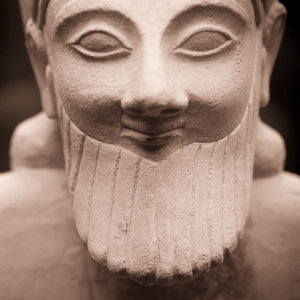
Welcome to The History of Cyprus Podcast -- a monthly series exploring the island’s past from 10,000 BCE to the 20th century. Each episode features in-depth conversations with leading scholars in archaeology, linguistics, political and social history, bringing academic insight to a wide audience. Together, we uncover the languages, cultures, conflicts, and legacies that shaped one of the Mediterranean’s most storied crossroads. Whether you’re a student, a history enthusiast, or just curious about Cyprus, this podcast offers something for everyone -- rooted in research, driven by storytelling. If you’d like to reach me, my name is Andreas. Please feel free to send me an email at cyprusthepodcast@gmail.com --------------------------------------------------------------- Follow The History of Cyprus Podcast Instagram and support the show on Patreon: https://www.patreon.com/TheHistoryofCyprusPodcast https://instagram.com/thehistoryofcyprus *The podcast image, ”Dressed for the Gods” (250BC) is from the British Museum taken by William Warby. Check out more of his work at flickr.com/photos/wwarby/

Language:

English


Episodes
Ask host to enable sharing for playback control

*NEW EPISODE!* 50. Kypriōn Politeia: The Political Structures and Administrative Frameworks in Iron Age Cyprus with Beatrice Pestarino

5/2/2026
The city-kingdoms of Iron Age Cyprus have always been something of a mystery -- in fact "city-kingdom" itself is a bit of a misnomer to begin with. In this episode, I’m joined by Dr. Beatrice Pestarino, expert in ancient political systems and author of Kypriōn Politeia: The Political and Administrative Systems of the Classical Cypriot City-Kingdoms, to explore the unique administrative and ideological frameworks of these polities. We discuss the roots of Cypriot kingship, the roles of officials like the basileus, anax, and damos, and how civic and religious authority were often one and the same. From the Idalion Tablet to the records of Kition, we examine the sophistication of land management, taxation, and bureaucratic roles such as the Rab Soferim (Chief of Scribes) and Rab Sarsourim (Chief of Commercial Agents). Along the way, we challenge colonial interpretations of Cypriot governance and ask what it really meant to be a "king" on the island. This episode offers a compelling look at how Cypriot city-states navigated imperial pressures while maintaining a distinctly local political identity.

Duration:01:20:43

Ask host to enable sharing for playback control

*NEW!* Primary Source L: The Idalion Tablet

4/19/2026
…and here we are...the 50th Primary Source! Thank you so much for your continued support; it truly means a lot! ---------------------------------------------------------------------------------------------- The Idalion Tablet's significance cannot be understated (not to be confused with the Idalion Bilingual). Dated to the 5th-century BCE, it offers rare insight into the island’s political, social, and linguistic history. Written in the Cypriot syllabary and the Arcadocypriot dialect of Greek, the bronze tablet records a public contract made during a siege, in which the king of Idalion and the city’s governing body (the dāmos) reward a family of physicians with land for providing free medical care to wounded citizens. This inscription stands out as one of the earliest known examples of state-sponsored healthcare and reveals a system of governance where power was shared between monarchy and civic institutions -- and not as an absolute monarchy as was once often suggested. It also underscores the administrative sophistication of Cypriot city-kingdoms and contributes significantly to our understanding of the Cypriot syllabary and the evolution of Greek dialects on the island. The Idalion Tablet thus serves as a key piece of evidence for reconstructing the civic and political life of Classical Cyprus. It is also the perfect Primary Source for next month's interview with Dr. Beatrice Pestarino as we discuss the political and social makeup of the Κυπρίων Πολιτεία (i.e., the Government of the Cypriots!)

Duration:00:02:38

Ask host to enable sharing for playback control

*50TH PRIMARY SOURCE!* Primary Source L: The Idalion Tablet

4/15/2026
…and here we are...the 50th Primary Source! Thank you so much for your continued support; it truly means a lot! As many of you may know, last week I was nominated for the 2026 CYDIA “Artemis Pouroulis” Culture & Arts Award for the work on The History of Cyprus Podcast. It’s a truly incredible recognition, and I’m very grateful to be included among so many inspiring initiatives that promote Cyprus and its history. You can support The History of Cyprus Podcast by voting for me, Andreas Charalambous, by following the link below. This recognition will help the podcast continue to grow and reach more people. Feel free to share the link as well. Thank you again for being part of this journey! ------>https://www.cyprusdiasporaforum.com/nominees-2026 And now...on to The Idalion Tablet! ---------------------------------------------------------------------------------------------- The Idalion Tablet's significance cannot be understated (not to be confused with the Idalion Bilingual). Dated to the 5th-century BCE, it offers rare insight into the island’s political, social, and linguistic history. Written in the Cypriot syllabary and the Arcadocypriot dialect of Greek, the bronze tablet records a public contract made during a siege, in which the king of Idalion and the city’s governing body (the dāmos) reward a family of physicians with land for providing free medical care to wounded citizens. This inscription stands out as one of the earliest known examples of state-sponsored healthcare and reveals a system of governance where power was shared between monarchy and civic institutions -- and not as an absolute monarchy as was once often suggested. It also underscores the administrative sophistication of Cypriot city-kingdoms and contributes significantly to our understanding of the Cypriot syllabary and the evolution of Greek dialects on the island. The Idalion Tablet thus serves as a key piece of evidence for reconstructing the civic and political life of Classical Cyprus. It is also the perfect Primary Source for next month's interview with Dr. Beatrice Pestarino as we discuss the political and social makeup of the Κυπρίων Πολιτεία (i.e., the Government of the Cypriots!)

Duration:00:05:22

Ask host to enable sharing for playback control

*WOW!* CYDIA 'Artemis Pouroulis' Culture & Arts Nomination!

4/10/2026
I'd like to take a second to thank you all for your kind words of encouragement and you listenership over the years. It's with your support that I've been nominated for this year's 2026 CYDIA 'Artemis Pouroulis' Culture & Arts award in Cyprus which is truly, truly an incredible honour. Voting is open until April 19th with the official gala taking place at the Parklane Resort in Limassol on May 9th -- and broadcast on RIK. It’s a truly incredible recognition, and I’m very grateful to be included among so many inspiring initiatives that promote Cyprus and its history. My name is Andreas Charalambous and you can support the History of Cyprus Podcast grow by voting here: -----> Feel free to share the link! https://www.cyprusdiasporaforum.com/nominees-2026 ...and incidentally we've hit quite the milestone! Next month is the 50th Episode! Here's to 50 more!

Duration:00:03:05

Ask host to enable sharing for playback control

*NEW EPISODE!* 49. Saints, Synods, and Struggles: The Rise of Christian Cyprus with Young Kim

4/2/2026
In this episode, I welcome Dr. Young Kim, Associate Professor at the University of Illinois Chicago, to discuss the role of Cyprus in Late Antiquity. Although often seen as politically unimportant under Roman rule, Cyprus played a key part in trade, religion, and cultural life. We explore how the island became deeply involved in early Christianity--appearing in the New Testament, participating in the first ecumenical councils like Nicaea, and eventually gaining autocephalic (independent) status for its Church. We also look at how saints’ lives, or hagiographies, offer insight into everyday life, travel, and religious change during this time. Special attention is given to St. Epiphanius--his fight against heresies and his dramatic clash with St. John Chrysostom!

Duration:01:08:57

Ask host to enable sharing for playback control

*BONUS!* Fragrant & Flavourful: On the Flaouna/Pilavuna & Identity with Anna Charalambidou

3/30/2026
In this bonus episode, I sit down with Dr. Anna Charalambidou from University College London to explore flaounes (φλαούνες/pilavunalar), the iconic Cypriot pastry. Using an ethnomethodological approach, Dr. Charalambidou examines how flaounes reflect and shape Cypriot identity across both Greek and Turkish communities on the island. We discuss their origins, regional variations, and the rich tradition of flaouna-making, uncovering how this beloved pastry connects generations and communities.

Duration:00:23:00

Ask host to enable sharing for playback control

*NEW!* Primary Source XLIX: An Excerpt from St. Epiphanius' Panarion

3/15/2026
St. Epiphanius ranks among the most important and well-known saints of Cyprus. Ordained as Bishop of Constantia (Salamis) in the 4th century, he was a steadfast defender of (o)rthodox Christian practice and belief. In fact "Epiphanius was respected not only for his piety and rectitude but for his learning. Churches far from Cyprus consulted him on doctrinal issues." In this dramatization, we hear an excerpt from The Panarion -- a theological treatise written by St. Epiphanius himself. Also known as the "Medicine Chest," the Panarion addresses 80 heresies, many emerging in the post-Nicene period. The excerpt featured here is from Against the Severians, a sect that vigorously rejected marriage and, at least according to The Panarion, viewed women as creations of Satan. Christians have wrestled with what it means to live in a body. Some saw the body as part of God’s good creation--maybe damaged after the Fall, but still good at its core. Others, though, thought the body just got in the way of drawing close to God. In this passage, he pushes back hard against their ideas. The Panarion stands out as a key historical source. It gives us a window into the mess of competing beliefs among early Christians, and it even lets us peek at what religion looked like in Late Antique Cyprus. Next month I welcome Dr. Young Kim to discuss the impact Cypriots made in forming early Christian thought and the foundations of Early Christianity in Cyprus!

Duration:00:02:41

Ask host to enable sharing for playback control

*BONUS!* Sun, Sand...and Scandinavians? Vikings in Cyprus

3/9/2026
OK so "Vikings in Cyprus" is a bit hyperbolic as the term Viking tends to suggest pre-Christian marauding warriors who pillaged and plundered all over Europe -- which Cyprus didn't experience. But Scandinavians? Most certainly! Over the past couple of months, I have been scouring the sources for references to Scandinavians and their presence in Cyprus. So far, I have identified four key witnesses to this phenomenon, all from different parts of the Scandinavian world. Chronologically they are: The Danish cleric Saxo Grammaticus, who first writes of King Erik the Evergood of Denmark's death and burial on Cyprus while travelling to the Holy Land (circa 1103); The Icelandic abbot Nikulas Bergsson, who records the presence of a contingent of the Varangian Guard* stationed in Paphos; King Sigurd the Crusader of Norway who stayed on Cyprus for sometime (c. 1107) before visiting Miklagaard ("The Great City," i.e., Constantinople), as recounted by the famous Icelandic writer Snorri Sturluson; and finally St. Birgitta of Sweden, whose foreboding words to the Latin rulers of Cyprus come to us directly from her own testimony (14th century). Together, their works offer rare but compelling evidence that Cyprus was not merely a distant waypoint, but a meaningful hinge between the West and the East within the wider world of medieval Scandinavian travel, devotion, and crusading activity. Please enjoy this bonus content of the dramatized excerpts (excerpts from all four have been included here in one extended Primary Source recording). Though I'd love to have a guest on the show to talk about the relationship between Scandinavia and Cyprus, I don't believe this has been explored in academia as I have not found any published paper. But the search continues! **Famed for their loyalty and ferocity, the Varangian Guard was a contingent of Scandinavian, Anglo-Saxon and Rus mercenaries that served as a personal guard to the Emperor in Constantinople.

Duration:00:07:19

Ask host to enable sharing for playback control

*NEW EPISODE!* 48. Ancient Art from Cyprus and the Mediterranean: The John & Mable Ringling Museum of Art with Joanna Smith

3/1/2026
In this special episode, I’m joined by Dr. Joanna S. Smith, Consulting Curator for the new permanent gallery for the Cypriot Collection at the John and Mable Ringling Museum of Art in Sarasota, Florida. With a career based on decades of fieldwork at sites like Polis Chrysochous, Dr. Smith tells the fascinating story behind The Ringling Museum's ancient art collection. She traces it from the dreams of John Ringling, a circus magnate who became an art patron, to the 19th century explorations of Luigi Palma di Cesnola. The conversation culminates in a look ahead to “Ancient Art from Cyprus and the Mediterranean” The Ringling’s new permanent gallery that opened in January of this year. Dr. Smith offers an inside view of what visitors can expect, the standout Cypriot pieces in the collection, and why this gallery marks a significant moment not only for the museum but for the understanding of Cyprus as a cultural crossroads of the ancient world. Learn more: https://www.ringling.org/event/ancient-art-from-cyprus-and-the-mediterranean/

Duration:01:04:36

Ask host to enable sharing for playback control

*SPECIAL!* Cypriot Naming Conventions and WWI Enlistment Data with Andrekkos Varnava

2/15/2026
Ever heard of the names "Finikou" or "Pastirou?" Neither have I! In this bonus clip from episode 31 on "Cyprus in the Great War: The Cypriot Mule Corps with Andrekos Varnava," Andrekos helps me work through the enlistment data from my grandparents' villages. We discuss Cypriot naming conventions and the frustrating dearth of data based on the inconsistent record keeping and the unusual Cypriot names from the period in a lighthearted discussion. Enjoy! Some of the roll call can be found in Andrekos' book, "Serving the Empire in the Great War."* **https://www.amazon.ca/Serving-empire-Great-War-imperial/dp/1526103699/ref=tmm_pap_swatch_0?_encoding=UTF8&qid=&sr=

Duration:00:09:08

Ask host to enable sharing for playback control

*NEW EPISODE!* 47. Signs, Scripts & Silence: Cypro-Minoan with Cassandra Donnelly

2/2/2026
Support the Podcast! Nominate The History of Cyprus Podcast for the 2026 CYDIA Award: https://www.cyprusdiasporaforum.com/nominate Cypro-Minoan is an undeciphered syllabic script in use during the Late Bronze Age, offering a rare glimpse into a local writing tradition at the crossroads of Aegean, Levantine, and Anatolian exchange. In this episode, Cassandra Donnelly breaks down what we do know about Cypro-Minoan—from its discovery and visual features to its possible uses in trade and identity. We explore the difference between script and language, discuss the curious appearance of single-sign texts, and examine how writing may have been taught “on the job” by merchants rather than in scribal schools. Donnelly explains how the writing system’s survival during the broader Bronze Age collapse reveals something unique about Cyprus’ decentralized social structure. We also dig into how early 20th-century archaeological ideologies shaped assumptions about ethnicity and literacy on the island.

Duration:01:26:43

Ask host to enable sharing for playback control

*NEW!* The History of Cyprus Podcast Cyprus Diaspora Forum 2026 Submission

1/20/2026
I'd like to take a moment to thank listener and patron H.I. along with many others on Patreon for nominating The History of Cyprus Podcast for the 2026 CYDIA Awards in "Culture & Arts" and "Education." As of two weeks ago, I wasn't aware of CYDIA until H.I. sent me a private message informing me of the event which now entering its third year. What is CYDIA? CYDIA "serves as a launchpad for startups, giving them the opportunity to showcase their innovative ideas to investors" and "recogni[zing] the contribution of the diaspora... accelerat[ing' opportunities for entrepreneurship, cross-border investment, and international partnerships." There are a number of categories including Education, Finance & Health to name but a few. From what I understand, this nomination is unofficial (i.e., The History of Cyprus Podcast hasn't been officially nominated). Once nominees are officially announced, they’re voted on, and a winner is chosen for each category. The more nominations The History of Cyprus Podcast gets, the more likely it is to be shortlisted! Why support? Being nominated for the CYDIA Award for Culture would be a major milestone for the History of Cyprus podcast. It represents a chance to bring Cypriot history to a wider audience, amplify stories that are often overlooked, and place Cyprus more firmly in the global conversation about culture and heritage. So, if you're able to, I'd love to receive your support. *** https://www.cyprusdiasporaforum.com/nominate *** Below is some of the information you'll need. The due date for any nominations is March. If you're looking for any additional information, please message me. The History of Cyprus Podcast Andreas Charalambous Toronto, Canada Phone No: 111-1111 cyprusthepodcast@gmail.com

Duration:00:01:07

Ask host to enable sharing for playback control

*NEW!* Primary Source XLVII: Sir Arthur Evans and the Cypro-Minoan Script

1/14/2026
Sir Arthur Evans was a British archaeologist best known for excavating the Minoan palace at Knossos in Crete. He named the Minoan civilization, developed the idea of a pre-Greek Aegean culture, and famously (though controversially) reconstructed parts of the site. But for our purposes, Evans played a key early role in identifying and naming the Cypro-Minoan script. During his study of Aegean scripts, he noticed that some undeciphered inscriptions from Late Bronze Age Cyprus resembled the Linear A script of Minoan Crete and he coined the term Cypro-Minoan to describe these signs, believing they represented a local offshoot of the Minoan writing tradition brought to Cyprus through cultural contact or colonization. Evans recognized its significance and proposed that it was a syllabic script related to earlier Aegean systems. In this excerpt, we hear from his own observations on the enigmatic script -- which leads us to next month's guest, Dr. Cassandra Donnelly as we discuss the enigmatic and undeciphered Cypro-Minoan script!

Duration:00:02:14

Ask host to enable sharing for playback control

*NEW EPISODE!* 46. By Sword and By Song: The Byzantine Warrior Hero with Chrysovalantis Kyriacou

1/1/2026
In this episode, I'm joined again by Dr. Chrysovalantis Kyriacou where we discuss the ακριτικά τραγούδια i.e., the Acritic Songs! These are heroic ballads from the borderlands that emerged between the 9th and 11th centuries, highlighting semi- mythological figures like the legendary Digenis Akritas. Passed down through performances at festivals and weddings -- often created and performed by or for rural peasants -- these songs provide rare insight into the lives, struggles, and values of marginalized medieval communities. Their transmission reflects both elite and popular storytelling styles, often mixing Homeric, Christian, and local themes. In Cyprus, these songs were adapted into the local dialect. They also included unique Cypriot experiences, like in The Song of Antzoules, which reflects Cypriot responses to events in Anemourion in Anatolia and subsequent Frankish rule. In Cyprus, the legend of Digenis is imprinted on the land itself, from his handprint on the Pentadaktylos to the rocks of Petra tou Romiou hurled at Saracen ships.

Duration:00:50:54

Ask host to enable sharing for playback control

*SPECIAL!* Dark Christmas Folklore in "Motherwitch," a Film by Minos Papas

12/24/2025
Merry Christmas! 'Tis the season to light your fireplaces and put out your colanders -- the 12 Days of Christmas are here! And of course you know, that means those pesky Kalikantzari (Christmas goblins) are back again, sowing mischief and cruel tricks. But it's not all bad news. Minos Papas' latest feature film* is making its rounds globally and featuring at the International Film Festival Rotterdam. I had the opportunity to screen the movie a couple weeks ago and chat again with Minos. This film is truly his love letter to Cyprus, its history and its heritage. In this episode, we chat about the performances, the themes and the post-production that went into the film. You'll also get to hear updates on how and when you can see the movie! *If you missed our first interview with Minos on the folklore and the making of Motherwitch, check out "Fantasy, Folklore & Film: 'Motherwitch' with Minos Papas" (October 2024)

Duration:00:44:09

Ask host to enable sharing for playback control

*NEW!* Primary Source XLVI: The Acritic Songs

12/14/2025
The Acritic Songs are a collection of Byzantine folk songs whose origins date back to the 9th-11th centuries. These songs celebrate the exploits of the "Acritae," or the frontiersmen, who patrolled the empire's periphery, protecting it from Saracen (Arab) marauders. Though we don't know the exact contexts in which these songs were performed, we know that they appealed to the bottom rungs of society, the disenfranchised and the down-trodden, as the songs were adopted and adapted all over the Greek speaking world -- including, of course, Cyprus. These songs were passed down in oral tradition and adapted linguistically in Cyprus in a way that reflected its own social and political realities. The stories themselves generally fell into two categories: those that celebrate royal authority and look towards God or the State as a source of comfort and protection (ca. 9th-12th centuries) and those which celebrate the hero fighting authority and resisting the cosmic order which is dated after the 13th century (see: Charopalema i.e., Digenis' battle with Death). For this particular song, as interpreted and performed by Michalis Christodoulides Costas Charalambides and Areti Kasapi (and can be purchased here)*, we hear an excerpt from "Ο Κάουρας" (i.e., The Crab). In the song, a giant, monstrous crab chokes the waters of a village/town, terrorizing the community. One of the most notable Acritic heroes, Digenis Akritas, is called upon to defend the people from its terror. The story of the Giant Crab evokes Herculean themes. Those familiar with Greek mythology might identify Digenis's battle with Hercules fighting Karkinos that came to assist the Lernean Hydra. Next month, I welcome back Dr. Chrysovalanti Kyriacou to discuss the Acrites and the Byzantine Warrior Hero! *Στες Άκρες Των Άκρων - Ακριτικά Τραγούδια Της Κύπρου: Μιχάλης Χριστοδουλίδης, Αρετή Κασάπη, Κώστας Χαραλαμπίδης **Artwork by Dimitris Skourtelis

Duration:00:02:17

Ask host to enable sharing for playback control

*NEW EPISODE!* 45. (in)Conspicuous Consumption: The Material Culture of Medieval Cyprus

12/1/2025
Material culture -- textiles, ceramics, furniture, even the games people played -- offers us a window into the lived experiences of a diverse society. From the grandeur of the Lusignan court, with its opulent gold-threaded tapestries and Venetian clocks, to the humble cooking vessels of the lower classes, these artifacts reveal not only economic and social divides but also cultural exchanges that blurred the lines between Greek, Latin, and near east traditions. Yet, uncovering these details isn’t always straightforward. Archaeological investigations of medieval Cypriot settlements are scarce, and much of what we know comes from written accounts--travelers and chroniclers who marveled at the wealth of the island’s nobility, or from the inventories of figures like Guy d’Ibelin, a bishop whose possessions reflected both his monastic vows and his feudal status. What can the material culture of medieval Cyprus tell us about its people, their identities, and their aspirations? How did objects serve as status symbols, as well as tools of everyday survival? And what challenges do historians and archaeologists face in reconstructing the material world of the past--especially for those at the lower rungs of society? Joining me in this episode is Dr. Maria Parani to help us piece together this fascinating mosaic of history.

Duration:00:43:06

Ask host to enable sharing for playback control

*NEW!* Primary Source XLV: The Travels of Wilbrand von Oldeburg

11/14/2025
To begin with, I'd like to draw your attention to the music in this primary source. It is called J. II. 9 (Turin Codex) also known as the Cyprus Codex, an anonymous manuscript created at the Nicosia court in the early 15th century during the Frankish rule of Cyprus under the Lusignan Dynasty. It is the only known source of Western music from the region and one of the rare exclusively French codices from that era. In other words, you're listening to Medieval Cypriot music that has been reconstructed by Dimitris Kountouras. The full album*, "ΜΟΥΣΙΚΗ ΑΠΟ ΤΗΝ ΑΥΛΗ ΤΩΝ ΛΟΥΖΙΝΙΑΝΩΝ: Ο ΚΩΔΙΚΑΣ ΤΗΣ ΚΥΠΡΟΥ" can be purchased here: https://exsilentio.org/ https://s22.gr/products/kountouras-kypros Wilbrand von Oldenburg, a nobleman from 12th-century Germany, pursued an ecclesiastical career and became a canon of Hildesheim in 1211. Connected to imperial and religious elites, he traveled to the Holy Land (1211–1213) for diplomacy and pilgrimage. His Itinerarium Terrae Sanctae is a key source on the political, military, and religious landscape of Lesser Armenia, Cyprus, and the Levant, highlighting the region’s cultural diversity. He makes several observations on the affluence of the island's nobility and their conspicuous consumption. This primary source serves as a springboard into my next episode with Dr. Maria Parani on the Material Culture of Medieval Cyprus! *Φανή Αντωνέλου φωνή / Fanie Antonelou voice Φλώρα Παπαδοπούλου γοτθική άρπα / Flora Papadopoulos gothic harp Ηλέκτρα Μηλιάδου βιέλα / Elektra Miliadou fiddle Νίκος Βαρελάς κρουστά / Nikos Varelas percussion Δημήτρης Κούντουρας φλάουτο με ράμφος & διεύθυνση/ Dimitris Kountouras recorder & direction

Duration:00:02:24

Ask host to enable sharing for playback control

*BONUS!* Armenian-Cypriots with Alexander-Michael Hadjilyra

11/9/2025
The history of Armenians in Cyprus is traced back to centuries, shaped by waves of migration, resilience, and cultural contributions. In this episode, I sit down with Alexander-Michael Hadjilyra to explore the deep-rooted history of Armenian Cypriots, from their earliest presence on the island to their pivotal role in modern Cypriot society. We discuss their arrival and establishment in Cyprus and how they maintained their distinct identity while integrating into Cypriot life. Hadjilyra sheds light on their contributions to commerce, education, and the arts, highlighting figures who played a crucial role in shaping the cultural and economic landscape. We also explore the challenges faced by the Armenian community, including displacement, language preservation, and political shifts, while examining how Armenian Cypriots navigated their dual identity in a changing world. Through stories of survival, adaptation, and innovation, this episode delves into how a small yet influential community helped shape Cyprus' history and continues to leave its mark today.

Duration:00:37:53

Ask host to enable sharing for playback control

*NEW EPISODE!* 44. Piety and Passion: Women in Medieval Cyprus with Angel Nicolaou-Konnari

11/1/2025
The legal status of women in medieval Cyprus was influenced by a mix of Byzantine, Frankish, and local customs. While legal frameworks varied, women often faced limitations on property ownership and inheritance rights. However, some women managed to attain positions of influence and power, challenging traditional norms. Despite societal constraints, women in medieval Cyprus demonstrated resilience, resourcefulness, and adaptability. Their contributions and agency, whether in domestic spheres, economic activities, or shaping political alliances, left an indelible mark on the island's history. Join me this month as I welcome back Dr. Angel Nicolaou-Konnari!

Duration:01:00:42