Location:
India
Description:
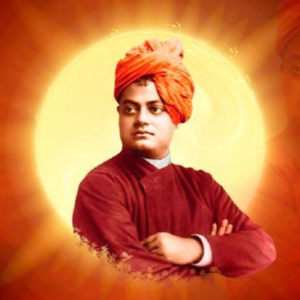
Voice of Vivekananda
Language:
English
Website:
http://vivekavani.com/
Email:
babu@vivekavani.com
Episodes
Freedom from Karma - Swami Sarvapriyananda
3/1/2024
If there exists only one Consciousness, how does the concept of Karma fit in?| Swami Sarvapriyananda
Duration:00:07:09
Professional Ambition and Excellence - Swami Sarvapriyananda
3/1/2024
What is the purpose of professional ambition and desire for excellence if it only enhances ego?
Duration:00:08:28
Story of Madalasa - Pravrajika Divyanandaprana
8/10/2021
Video Link🔻
Story of Madalasa - Pravrajika Divyanandaprana
Duration:00:09:49
How to Succeed in Spiritual Life? - Swami Sarvapriyananda
12/12/2020
Video File:
How to Succeed in Spiritual Life? || Swami Sarvapriyananda
✅ To Subscribe Send 'Yes' on WhatsApp: 9640003646
Duration:00:15:19
Why Do We Suffer? - Pravrajika Divyanandaprana
12/12/2020
YouTube Video: Why Do We Suffer? - Pravrajika Divyanandaprana ✅ To Subscribe Send 'Yes' on WhatsApp: 9640003646
Swami Vivekananda’s Quotes On Struggle
Duration:00:02:38
Where Self Meets God - Swami Atmarupananda
8/19/2020
Where Self Meets God - Swami Atmarupananda
Duration:00:45:45
Eternal Witness - Swami Sarvapriyananda
8/11/2020
Eternal Witness - Swami Sarvapriyananda
Duration:00:51:59
Sri Sarada Nama Sankirtan by Swami Sarvagananda
8/10/2020
Sri Sarada Nama Sankirtan by Swami Sarvagananda
Duration:00:13:05
Dhimiki Dhimiki Dhim Nache Bhola Naath Shiva Song | Shivaratri - Belur Math
8/9/2020
Video Link
Duration:00:13:05
Avatar Varishthay Sri Ramakrishna Dev - Swami Nikhileswarananda
8/9/2020
Ramakrishna has no peer. Nowhere else in the world exists such unprecedented perfection, such wonderful kindness to all, such intense sympathy for men in bondage.
I am what I am , and what I am is always due to him. Whatever in me or in my word s is good and true and eternal came to me from his mouth, his heart, his soul. Sri Ramakrishna is the spring of this phase of the earth’s religious life., of its impulses and activities. If I can show the world one glimpse of my Master I shall not live in vain.
In the Ramakrishna Incarnation there is knowledge, infinite love, infinite work, infinite compassion for all beings. You have not yet been able to understand him. Even after hearing about him, most people do not understand him. What the whole Hindu race has thought in ages, he lived in one life. His life is the living commentary to the Vedas of all nations. People will come to know him by degrees.
~ Swami Vivekananda
Duration:00:56:31
Sri Ramakrishna and Vedanta - Pravrajika Divyanandaprana
8/8/2020
Sri Ramakrishna and Vedanta
Duration:01:08:35
Ascent to Divine Love - Swami Yuktatmananda
8/8/2020
Ascent to Divine Love
Duration:00:55:17
Wants and Needs - Swami Mahayogananda
8/7/2020
The world is in the grip of a consumerist mania, with wants far exceeding needs, leading to environmental, social, and personal problems. The Vedic viewpoint offers an alternative way, says Swami Mahayogananda, in this lecture.
Duration:00:55:50
The Power of Holy Company - Swami Yuktatmananda
8/7/2020
The Power of Holy Company
Duration:01:08:40
Manisha Panchakam - Discussion | Swami Sarvapriyananda
8/7/2020
Manisha Panchakam is a set of five verses in which Adi Shankaracharya succinctly presents the essence of Advaita Vendanta, philosophy of non-duality.
The occasion for this composition was an encounter between Shankaracharya and a sweeper. When Shankaracharya was walking, along with his disciples, towards the temple of Lord Viswanath in Varanasi, it so happened that a sweeper was walking towards him on the same street. Shankaracharya asked the sweeper to move away from his path. The sweeper then asked him some questions that form the substatnce of two verses which are a prelude to the main composition.
On hearing the sweeper's questions, Shankaracharya realized that the person before him was no ordinary sweeper. Shankaracharya's response to these questions, given in five verses, are called Manisha Panchakam; the word 'manisha' meaning 'firm conviction' appears in the last line in all five ("pancha" means five) verses.
Manisha Panchakam - Discussion | Swami Sarvapriyananda
Duration:02:07:56
02 Q & A Swami Sarvapriyananda Manisha Panchakam Second Q & A Session
8/7/2020
Manisha Panchakam is a set of five verses in which Adi Shankaracharya succinctly presents the essence of Advaita Vendanta, philosophy of non-duality.
The occasion for this composition was an encounter between Shankaracharya and a sweeper. When Shankaracharya was walking, along with his disciples, towards the temple of Lord Viswanath in Varanasi, it so happened that a sweeper was walking towards him on the same street. Shankaracharya asked the sweeper to move away from his path. The sweeper then asked him some questions that form the substatnce of two verses which are a prelude to the main composition.
On hearing the sweeper's questions, Shankaracharya realized that the person before him was no ordinary sweeper. Shankaracharya's response to these questions, given in five verses, are called Manisha Panchakam; the word 'manisha' meaning 'firm conviction' appears in the last line in all five ("pancha" means five) verses.
02 Q & A Swami Sarvapriyananda Manisha Panchakam Second Q & A Session
Duration:00:52:15
01 Q&A Swami Sarvapriyananda Manisha Panchakam First Q & A Session
8/7/2020
Manisha Panchakam is a set of five verses in which Adi Shankaracharya succinctly presents the essence of Advaita Vendanta, philosophy of non-duality.
The occasion for this composition was an encounter between Shankaracharya and a sweeper. When Shankaracharya was walking, along with his disciples, towards the temple of Lord Viswanath in Varanasi, it so happened that a sweeper was walking towards him on the same street. Shankaracharya asked the sweeper to move away from his path. The sweeper then asked him some questions that form the substatnce of two verses which are a prelude to the main composition.
On hearing the sweeper's questions, Shankaracharya realized that the person before him was no ordinary sweeper. Shankaracharya's response to these questions, given in five verses, are called Manisha Panchakam; the word 'manisha' meaning 'firm conviction' appears in the last line in all five ("pancha" means five) verses.
01 Q&A Swami Sarvapriyananda Manisha Panchakam First Q & A Session
Duration:01:35:58
04 Swami Sarvapriyananda Manisha Panchakam Session 4 Verse 4-5
8/7/2020
Manisha Panchakam is a set of five verses in which Adi Shankaracharya succinctly presents the essence of Advaita Vendanta, philosophy of non-duality.
The occasion for this composition was an encounter between Shankaracharya and a sweeper. When Shankaracharya was walking, along with his disciples, towards the temple of Lord Viswanath in Varanasi, it so happened that a sweeper was walking towards him on the same street. Shankaracharya asked the sweeper to move away from his path. The sweeper then asked him some questions that form the substatnce of two verses which are a prelude to the main composition.
On hearing the sweeper's questions, Shankaracharya realized that the person before him was no ordinary sweeper. Shankaracharya's response to these questions, given in five verses, are called Manisha Panchakam; the word 'manisha' meaning 'firm conviction' appears in the last line in all five ("pancha" means five) verses.
04 Swami Sarvapriyananda Manisha Panchakam Session 4 Verse 4-5
Duration:01:21:32
03 Swami Sarvapriyananda Manisha Panchakam Session 3 Verse 2-3
8/7/2020
Manisha Panchakam is a set of five verses in which Adi Shankaracharya succinctly presents the essence of Advaita Vendanta, philosophy of non-duality.
The occasion for this composition was an encounter between Shankaracharya and a sweeper. When Shankaracharya was walking, along with his disciples, towards the temple of Lord Viswanath in Varanasi, it so happened that a sweeper was walking towards him on the same street. Shankaracharya asked the sweeper to move away from his path. The sweeper then asked him some questions that form the substatnce of two verses which are a prelude to the main composition.
On hearing the sweeper's questions, Shankaracharya realized that the person before him was no ordinary sweeper. Shankaracharya's response to these questions, given in five verses, are called Manisha Panchakam; the word 'manisha' meaning 'firm conviction' appears in the last line in all five ("pancha" means five) verses.
03 Swami Sarvapriyananda Manisha Panchakam Session 3 Verse 2-3
Duration:01:11:04