
Premium
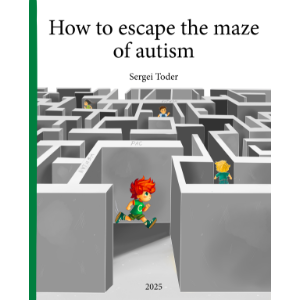
How to Escape the Maze of Autism and ASD.docx
1/25/2025
Introduction
1/25/2025
Introduction
1/10/2025
Looks like we’ve got a new kid — and he’s Autistic.
1/25/2025
IV Zones of information processing:
1/25/2025
Chapter 1. Auditory processing and language skills: how we perceive, absorb, and express information.
1/25/2025
Inhalation
1/25/2025
And now, one last crucial fact about inhalation:
1/25/2025
Exhalation
1/25/2025
Attention!
1/25/2025
So what’s the cause of the missing inhale — and, as a result, the shortened, dysfunctional exhale — in extraordinary children?
1/25/2025
1.1 The breathing function — one of the body’s most vital.
1/25/2025
1.2 The mechanism of cellular oxygen supply.
1/25/2025
1.3 Diaphragmatic innervation.
1/25/2025
How is the diaphragm innervated?
1/25/2025
Under normal conditions:
1/25/2025
1.4 Causes and consequences of diaphragmatic spasm.
1/25/2025
So, we smoothly approach the main topic of our “issue”:
1/25/2025
1.5 Deficit of cerebral blood supply.
1/25/2025
Sensory NONintegration: How to escape the maze of Autism and ASD
1/25/2025
Chapter 2. Motor planning and the execution of sequential movements and actions. Part 1
1/25/2025
Chapter 2. Motor planning and the execution of sequential movements and actions. Part 2
1/25/2025
Chapter 3. The third zone of information processing.
1/25/2025
Chapter 4. Sensory modulation – the fourth zone of information processing.
1/25/2025
4.1 Muscles of inhalation and exhalation.
1/25/2025
4.2. Muscles and their distinctive characteristics.: Restorative exercise program for children with Autism and ASD.
1/25/2025
4.3 Diaphragmatic breathing.
1/25/2025
Chapter 5. Diagnostics, multidimensional assessments, and human posture.
1/25/2025
5.1 Diagnostics.
1/25/2025
Block number 2:
1/25/2025
Block number 3:
1/25/2025
5.2 Diagnosis of rotational subluxation of the atlas (C1 Vertebra).
1/25/2025
5.3 Inspection from the front (Frontal plane).
1/25/2025
Sagittal plane.
1/25/2025
Head position
1/25/2025
5.6 Forward bend examination (Horizontal plane)
1/25/2025
5.7 Measurement of chest circumference.
1/25/2025
5.8 Determining pelvic position.
1/25/2025
Chapter 6. Differential diagnosis of various types of postural disorders.
1/25/2025
6.1. Slouched posture.
1/25/2025
6.2. Scoliotic posture in children with ASD.
1/25/2025
6.3. Scoliotic disease.
1/25/2025
6.4. Osteochondrosis with scoliotic manifestations.
1/25/2025
Chapter 7. Strategy for postural deformity correction.: 7.1. A note for parents of children with ASD and Autism.
1/25/2025
Chapter 8. Assessment of the functional state of the musculoskeletal system and physical development indicators in children with ASD.
1/25/2025
Chapter 9. Regulation of motor activity.
1/25/2025
Chapter 10. Instability and mobility of different sections of the spine.
1/25/2025
10.1. Instability of the cervical spine.
1/25/2025
10.2. Cervical spine mobility.
1/25/2025
10.3. Lumbar spine mobility.
1/25/2025
Assessed as follows:
1/25/2025
Chapter 11. Therapeutic physical training for respiratory diseases.
1/25/2025
Chapter 12. A deficiency of molecular and atomic oxygen equals a biological catastrophe for the human body.
1/25/2025
Chapter 13. Dehydration in children with autism and ASD. Water-salt absorption in the human body.
1/25/2025
Afterword
1/25/2025
Practical guide
1/25/2025
Diaphragmatic breathing
1/25/2025
Chest breathing
1/25/2025
Full breathing
1/25/2025
Special dynamic breathing exercises.
1/25/2025
Associated patterns.
1/25/2025
Exercises for the correction of longitudinal and transverse flatfoot in various starting positions.
1/25/2025
Target area: the back and chest.
1/25/2025
Lumbosacral area massage using the nephropathy method (for younger school-aged children)
1/25/2025
Glossary
1/25/2025
List of references
1/25/2025
Testimonials
1/25/2025